Loading
Loading
Loading
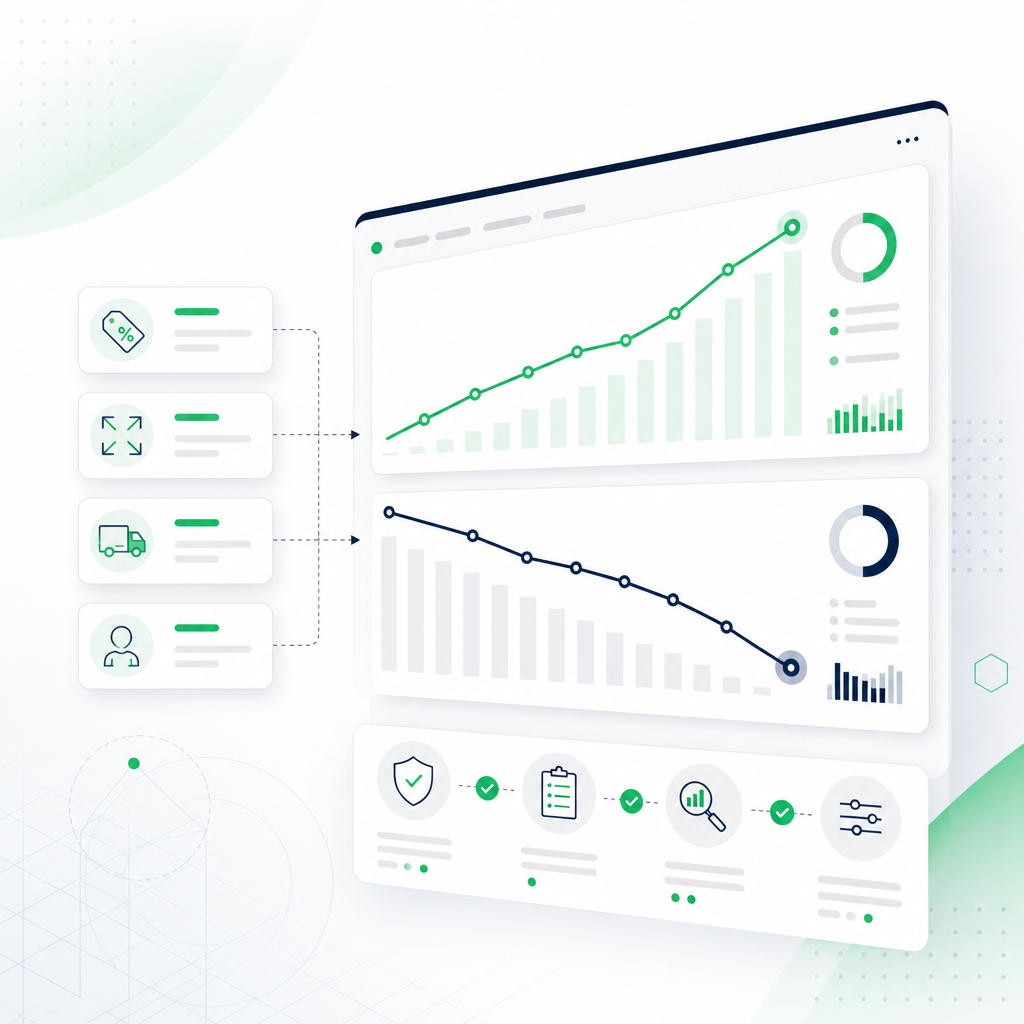
Revenue grows while margin quietly shrinks because the cost of delivering what you sold is disconnected from the sale. Here's how to govern the leak.
One of the most unsettling patterns in a growing company is revenue climbing while margin quietly slides the other way. You're winning more, selling more, recognizing more, and somehow keeping less of each dollar. It rarely happens because of one bad decision. It happens because the cost of delivering what you sold is disconnected from the sale itself, so margin erodes in places no single system is watching.
Here's where the leak comes from, why it stays invisible, and how governing the seam between sales and delivery stops it.
At the moment of sale, the deal looks profitable. The headline price minus an assumed cost of delivery produces a healthy margin on paper. But that assumed cost is a guess made by sales, in the CRM, before delivery has validated anything. The real cost is determined later, in a different system, by how the work actually gets executed. The gap between the assumed cost and the real cost is where margin quietly disappears.
Because the sale and the delivery cost live in different systems, nobody sees the gap in real time. Sales sees healthy deals. Delivery sees strained capacity. Finance sees compressed margin at the end of the quarter. Each is looking at a piece, and the erosion happens in the space between their views.
When a deal needs to close before quarter-end, price concessions are the fastest lever. The revenue still lands in the forecast, but the margin was compressed before delivery even began, and often nobody reconciles the discount against the delivery cost that follows. Repeated across a quarter, discretionary discounting silently removes margin that never gets accounted for.
Deals close on optimistic scope assumptions. Then delivery discovers the real complexity, the work expands, and the customer expects the original price. You absorb the difference. A pattern of change orders and scope growth is the fingerprint of this leak. The estimation process is systematically under-pricing the work.
Aggressive timelines committed during the sale force delivery to staff with overtime, contractors, or by pulling resources from other projects. That premium cost was never in the original margin model. The deal looked profitable at sale and lost money in execution.
Some accounts consume far more support, custom work, and account-management attention than their contract justifies. Without connecting cost-to-serve back to revenue by account, these negative-margin relationships stay invisible. You keep serving them, and they keep quietly dragging the portfolio down.
Each of these leaks is small and local. No single deal looks like a disaster. The erosion only becomes visible in aggregate, at the finance layer, quarters later, by which point it's a structural margin problem rather than a series of correctable decisions. And because the cost data lives apart from the sale, the feedback never reaches the people making the pricing and scoping decisions. Sales keeps pricing deals the same way, because sales never sees the margin outcome.
Stopping the leak means governing the connection between what was sold and what it actually costs to deliver, continuously, and early enough to change the decision. That requires reconciling across the seam rather than discovering the erosion after the fact.
Margin doesn't erode by surprise. It erodes because nobody connected the sale to the delivery to the cost, so the decisions that compress margin get made over and over, invisibly, by people who never see the result. Governing that seam closes the loop: it makes the true cost of a deal visible while you can still do something about it, so growth actually translates into profit instead of quietly leaking it away.
Want to find where your margin is leaking between the sale and the delivery? Run the revenue governance assessment →
An Executive Briefing starts with the same question this article does — ask it about your own operation.
Book an Executive Briefing →